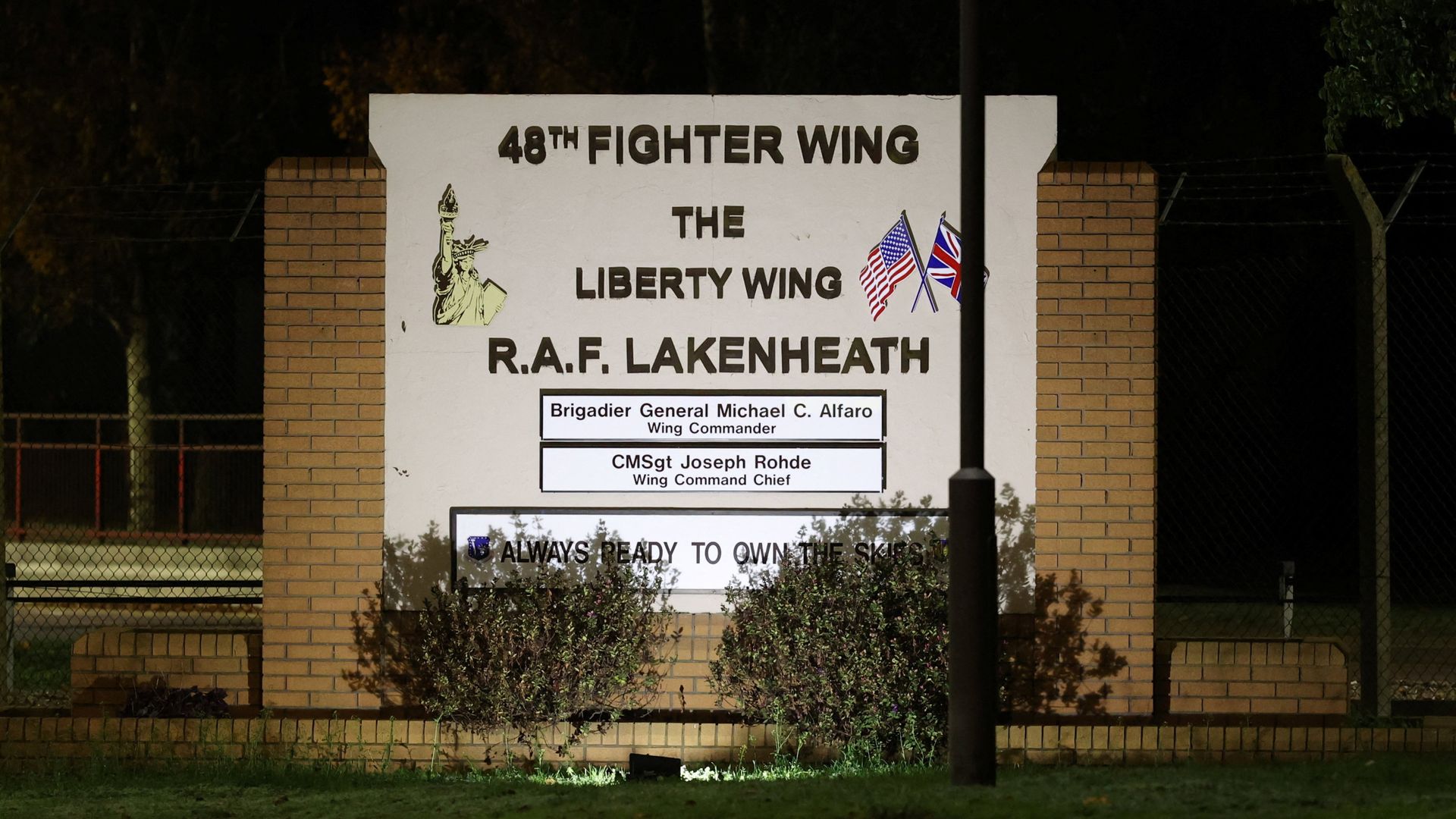
When a red-letter alert flashes across military screens ordering service members to immediately seek indoor cover, nobody is laughing. That exact scenario played out at RAF Lakenheath in Suffolk when US Air Force personnel were forced into emergency shelter following reports of suspected unauthorised drone activity.
If you've been following defense news over the past couple of years, this script feels painfully familiar. Unidentified unmanned aerial vehicles hovering near sensitive military installations aren't isolated anomalies anymore. They represent a persistent headache for allied defense commands across Europe.
What Actually Happened at Lakenheath
The incident kicked off on a Friday evening. According to official statements from the US Air Force, security forces responded swiftly to the airspace intrusion. Internal base messaging utilized the stark red-world protocols, telling personnel to locate the nearest shelter room immediately.
Fortunately, subsequent checks confirmed that no personnel were hurt, and crucially, no aircraft or vital base infrastructure sustained any damage. Local British authorities and parliamentarians quickly stepped in to reassure residents outside the perimeter fence that the situation was contained and that the general public faced no active threat. Additional journalism by Associated Press delves into similar perspectives on the subject.
Yet, resolving the immediate lockdown doesn't erase the underlying tension. RAF Lakenheath isn't just any ordinary airfield. As a cornerstone facility hosting American forces in the United Kingdom, its security posture is perpetually dialed up.
The Broader Threat Matrix
You cannot look at this Lakenheath drone scare in a vacuum. It comes on the heels of a tense strategic shuffle across British bases. Just days prior, the US military relocated several warplanes out of nearby RAF Mildenhall amid heightened security worries linked to potential external threats. Similar precautions have rippled through other installations like RAF Fairford, driven by intelligence warnings regarding hostile state actors.
Military planners face a nightmare scenario with commercial drone technology. Small quadcopters and advanced fixed-wing UAVs are cheap to buy, hard to spot on traditional radar, and nearly impossible to attribute immediately. When an unknown machine crosses into restricted military airspace, commanders cannot afford to assume it's just a hobbyist messing around with a Christmas gift. They have to treat it like active reconnaissance.
The security puzzle extends far beyond British borders. Over recent years, mysterious drone swarms have buzzed sensitive defense sites, industrial parks, and critical infrastructure across Germany and the wider European theatre. Defense analysts frequently point fingers at state-backed espionage networks—ranging from Russian intelligence operations to proxy threats tied to Iran. Finding the operators launching these devices from nearby commercial vessels or hidden terrestrial launch points remains an ongoing cat-and-mouse game for counter-intelligence agencies.
Protecting Strategic Hubs Moving Forward
Securing an active military base against low-altitude drone intrusions requires a complete overhaul of traditional defense thinking. Cold War-era perimeter fences and armed guards don't stop a carbon-fiber quadcopter from peering into hangars or mapping radar frequencies.
Both the UK Ministry of Defence and visiting allied forces are learning that counter-drone technology must evolve just as fast as commercial drone availability expands. Juggling operational security with public communication is another tightrope walk. When local MPs have to jump on social media to calm panicked residents after emergency sirens sound, it highlights the communication gap that occurs when high-security facilities lock down.
The skies over East Anglia will remain a prime target for foreign intelligence gathering as long as strategic bombers and refueling wings operate from British soil. Expect more security spikes, stricter local reporting guidelines, and a rapid acceleration of anti-drone defense grid investments across every allied installation in the region.