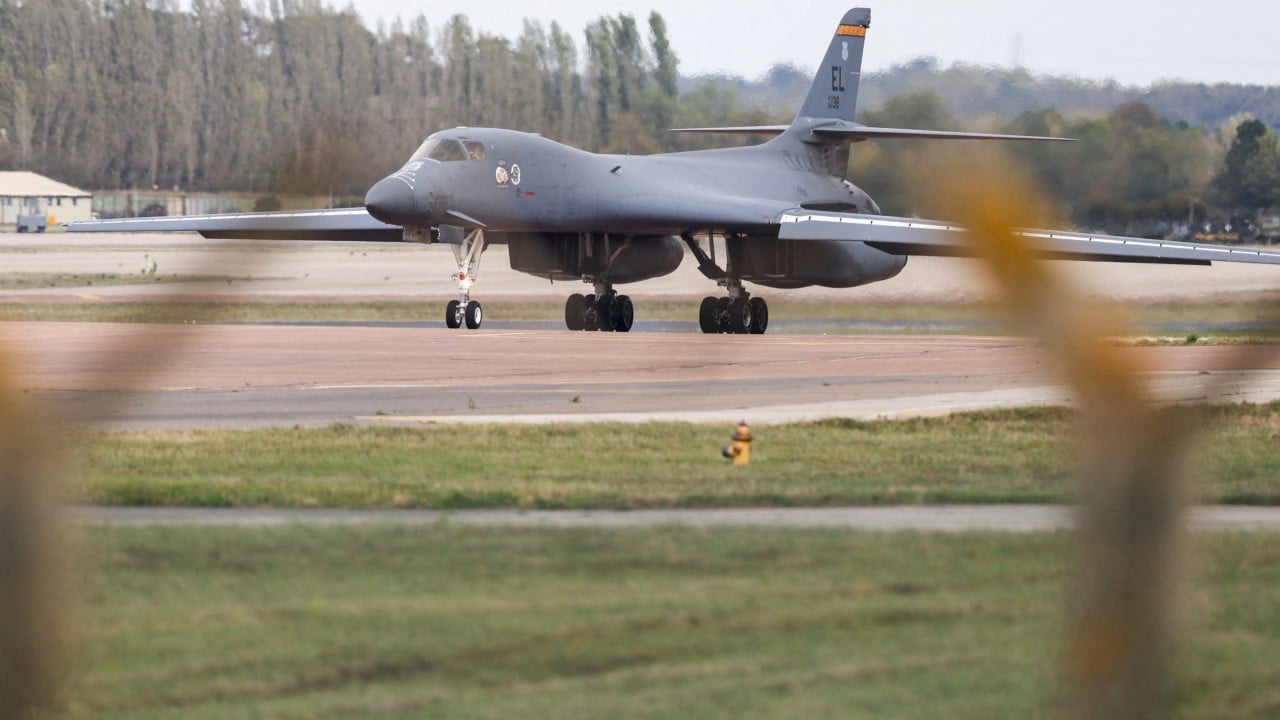
International security just crossed a messy, dangerous line. Federal prosecutors in Manhattan unsealed an eight-count superseding indictment targeting three men accused of acting as operatives for Iran and its proxy networks. The core of the case involves a chilling plot to attack RAF Fairford in the United Kingdom—a strategic military installation housing American service members and long-range bombers.
If you think modern state-sponsored threats are confined to cyberattacks or distant proxy skirmishes, this case proves otherwise. The tentacles of transnational terror reach deep into Western soil, utilizing local assets, fuel delivery fronts, and even jailhouse communications to coordinate violence.
Inside the Manhattan Federal Court Indictment
The Department of Justice didn't pull punches. The unsealed documents name Mohammad Baqer Saad Dawood al-Saadi, a dual Iranian-Iraqi national already jailed in the US; Mohsen Mohajeri, an Iranian national; and Mohammad Ali al-Hassani, an Iraqi national. Prosecutors allege these figures acted on behalf of the Islamic Revolutionary Guard Corps (IRGC) and Kata'ib Hezbollah, both designated foreign terrorist organizations.
The indictment lays out a disturbing pattern of operations spanning multiple continents. The trio is accused of coordinating nearly 20 targeted attacks or plots against Jewish communities and Western interests in Europe and North America. But the crown jewel of their alleged conspiracy was the assault on RAF Fairford in Gloucestershire, England.
Security forces discovered three vans loaded with fuel parked near the base perimeter, meant to serve as mobile incendiary devices. Quick intervention by UK counter-terrorism police disrupted the scheme before the vehicles could reach their targets, leading to a string of local arrests.
The Jailhouse Command Structure
What makes this conspiracy genuinely wild is how it continued even after initial law enforcement interventions. Al-Saadi, who was already locked up in a New York facility following earlier terrorism charges related to European plots, didn't stop operating.
According to federal investigators, al-Saadi used coded language during jailhouse phone calls with relatives to push money down the chain. He instructed handlers to fund al-Hassani and local operatives tasked with driving the fuel-laden vans to the British airbase.
This reality shatters the naive assumption that arresting a single commander neutralizes a cell. Modern threat actors rely on decentralized communication channels, family networks, and encrypted messaging to keep operations alive from behind bars. When a jailed operative can still direct logistical movements across the Atlantic, prison walls start looking porous.
The Broader Shadow War on Western Soil
British domestic intelligence agency MI5 has warned repeatedly that Iranian state-backed operations inside the UK are expanding beyond traditional dissident tracking. We are watching a shift from surveillance and intimidation to active kinetic sabotage and terror plots on military infrastructure.
The choice of RAF Fairford isn't random. Because the base is utilized by the US Air Force to launch heavy bomber sorties, it represents a direct intersection of American and British defense power. Tehran has made no secret of its stance, openly declaring that any foreign military bases used to launch strikes against Iranian territory will be treated as legitimate targets. Translating that rhetoric into fuel-truck bombings on British turf brings the shadow war right into our neighborhoods.
Attorney General Todd Blanche made the administration's stance clear: plotting against military bases housing American personnel invites federal prosecution with full global reach. Yet, arresting low-level local drivers while mastermind figures operate from secure foreign or domestic detention cells highlights a persistent structural vulnerability in alliance-level counter-terrorism.
Expect intelligence sharing between London and Washington to tighten rapidly over the coming months. The era of treating domestic security as distinct from foreign military flashpoints is officially over.