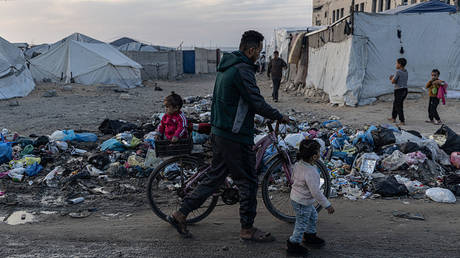
An Israeli settler pogrom near Jericho killed 72-year-old Palestinian woman Fadda Mohammed Fheidat and wounded 10 others, and if you read that headline thinking it was just another isolated West Bank clash, you're missing the playbook.
What happened in Duyuk al-Tahta on the outskirts of Jericho wasn't a spontaneous street brawl. It came roughly two weeks after settlers moved into eight homes in that exact neighborhood, turning an ongoing property seizure into gunfire. When a neighborhood gets hollowed out house by house, violence isn't an accident. It's the enforcement arm.
I've watched West Bank coverage for years, and the biggest mistake readers make is treating every shooting or arson incident as a standalone tragedy. You lose the thread that way. Look closely at Duyuk al-Tahta and you see how legal disputes, armed civilian groups, military responses, and conflicting narratives lock together like gears.
What Actually Happened Outside Jericho
Let's start with the ground facts as reported by residents, medical officials, and outlets covering the incident. Early Tuesday—following initial reports that surfaced Monday evening into the night—armed Israeli settlers attacked Duyuk al-Tahta, a neighborhood on the outskirts of Jericho in the occupied West Bank.
Witnesses told Reuters that settlers opened fire outside Fheidat's home. Residents threw stones to defend themselves. Then more settlers arrived and fired at Palestinian houses, Fheidat's included.
Her brother-in-law, Ahmed Aref, 62, said a bullet struck Fheidat in the head while she stood in front of her house. He found her lying on the ground, bleeding from her head. The Palestinian Health Ministry confirmed she died, and 10 other people were wounded.
Then comes the chaotic chain reaction that always seems to follow in these moments. Fheidat's son, Arafat, heard his mother was hurt and rushed toward the scene. His wife, Naama Fheidat, said he was in shock and accidentally clipped a settler's car parked in a driveway—a car witnesses say had nobody inside. According to those witnesses, settlers opened fire wildly anyway, hitting several people, including Arafat in the torso.
Even the ambulance ride turned into another flashpoint. Arafat said Israeli troops stopped the ambulance carrying him toward a hospital in Ramallah and arrested him.
Meanwhile, the Israeli military offered a very different framing. Rather than commenting on Fheidat's death, the army said it was responding to "ongoing incidents" involving an alleged car-ramming, telling Reuters that Palestinians accelerated a vehicle into an Israeli vehicle and caused casualties on both sides.
That gap between eyewitness accounts and military statements is huge. Honestly, if you only read one side's press line, you walk away with a completely distorted picture of who initiated force and who was standing in front of their own front door.
Why This Israeli Settler Pogrom Connects to Land Grabbing
Here's the detail a quick breaking-news summary glosses over: Duyuk al-Tahta was already under pressure before a single shot was fired.
About two weeks earlier, settlers took over eight homes in the neighborhood. The Binyamin Regional Council, which represents settlers in the area, said it helped facilitate families moving into eight homes bought from Palestinians.
Jericho's Palestinian governor, Hussein Hamayel, pushed back hard on that claim, saying settlers couldn't legally buy the land because it belongs to the state. Legal experts speaking to Al Jazeera in separate reporting on Jericho land seizures have also pointed out that Palestinians are barred from selling West Bank homes to Israelis, meaning such transfers aren't normal real estate deals—they're part of a broader push to drive residents out.
Think about what happens on the ground once new settler outposts or occupied houses sit inside or next to a Palestinian neighborhood. Daily life shrinks. Farmers worry about leaving their fields. Families watch their kids play closer to the house. Every knock or car engine outside triggers dread.
When an Israeli settler pogrom hits a community already rattled by home seizures, the immediate toll is 1 dead and 10 wounded. The longer-term toll is psychological exhaustion and forced retreat. You don't even have to bulldoze every house if residents decide they can't keep their families in the line of fire.
The Bigger Trend Most Readers Miss
People often ask whether settler violence is spiking or just getting more media attention. The numbers say it's genuinely climbing.
According to the United Nations, at least 1,143 Palestinians—including 250 children—have been killed in the occupied West Bank since October 7, 2023, a tally that includes killings by Israeli settlers living in illegal settlements. UN officials have described the surge in settler attacks as reaching an "unprecedented level".
Data tracking backs that up. The Armed Conflict Location & Event Data Project, known as ACLED, has stated that 2026 is on track to be the most violent year for settler-related violence since ACLED began monitoring the West Bank a decade ago. In July alone, 11 people were killed across four incidents involving armed settlers alongside Israeli forces.
Why does that matter? Because trends like that don't happen in a vacuum. When armed civilians operate in communities where property disputes are already heated, and accountability feels nonexistent, gunfire becomes a routine tool rather than an extreme outlier.
And notice the diplomatic ripple happening right alongside it. On November 17, 2026—the very day coverage of the Jericho killing spread—the United Kingdom announced new sanctions on eight Israeli companies tied to West Bank settlements. That kind of move shows foreign governments are starting to treat settlement expansion and settler pressure as an active political crisis, not background noise.
Common Misconceptions About West Bank Settler Violence
Let's clear up a few things people get wrong when talking about attacks like the one in Jericho.
First, people assume settler violence is just fringe vigilantes acting completely outside the system. Sometimes individuals act on their own, sure. Yet in places like Jericho, local councils openly facilitate moves into contested homes, and residents repeatedly report that armed settlers move with army backing or little interference.
Second, readers often treat "clashes" as symmetric fights. Throwing stones outside your own house when armed men shoot at your walls is not the same thing as bringing live ammunition into a residential neighborhood. Pretending both sides simply "clashed" flattens reality.
Third, people think an incident ends when the ambulance leaves. For Fheidat's family, it meant burying a 72-year-old woman, treating 10 wounded neighbors, and dealing with a son shot in the torso and arrested out of an ambulance. For Jericho residents watching their homes, it meant wondering which house comes next.
How to Read Coverage Like This Without Getting Played
If you follow Middle East news—or any conflict zone—you'll get much better signal if you change how you read updates on a story like this.
- Separate initial claims from verified facts. Early military statements often frame incidents around alleged attacks or car-rammings before independent verification exists. Read them as one party's position, not settled truth.
- Look for the property or political trigger. Ask what happened in that exact neighborhood days or weeks earlier. In Duyuk al-Tahta, the eight-home takeover two weeks prior explains why tension was already at a boiling point.
- Cross-check medical and human rights sources. Hospital directors, emergency responders like the Palestine Red Crescent Society, UN briefings, and ACLED datasets give concrete baselines that cut through spin.
- Track follow-up accountability. Watch whether arrests happen, whether charges are filed, and how governments respond with measures like sanctions. Silence after a killing tells you just as much as the headlines on day one.
Watch what happens over the next few weeks in Jericho and across the West Bank—not just in speeches, but in who gets charged, which homes stay occupied, and whether international pressure moves past announcements.
Al Jazeera report on settlers attacking families west of Jericho
This video report covers the armed settler attack west of Jericho and its impact on local families.