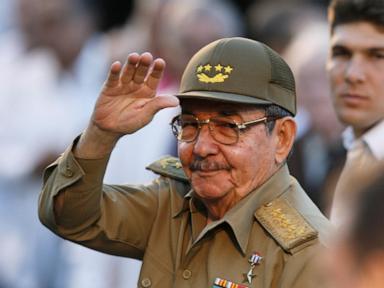
You won't see Raúl Castro in a Miami courtroom anytime soon. Let's be honest right from the start. When Florida Attorney General James Uthmeier announced state-level charges against the 95-year-old former Cuban president, nobody with a basic grasp of geopolitics expected a perp walk.
Yet, the indictment filed over the infamous 1996 downing of civilian planes flown by Brothers to the Rescue isn't just political theater. It's a calculated legal maneuver that layers state conspiracy to commit first-degree murder charges on top of earlier federal indictments.
The Shadows of February 1996
February 24, 1996, remains a raw nerve in South Florida. Three unarmed Cessna aircraft operated by the exile group Brothers to the Rescue left Opa-Locka Airport. They flew out over the Florida Straits, looking to spot Cuban migrants adrift on rafts.
Cuban MiGs intercepted them. They blew two of the planes out of the sky with air-to-air missiles. Four people died.
At the time, Raúl Castro served as Cuba's Minister of the Revolutionary Armed Forces. Prosecutors argue he gave the explicit green light for the attack. Cuban intelligence agents belonging to the Wasp Network had infiltrated the exile organization to feed flight paths back to Havana.
Decades passed. Fidel Castro died. Raúl took power, stepped down, and handed the reins to Miguel Díaz-Canel while quietly retaining heavy influence behind the scenes. For years, the families of the pilots fought for accountability in an international vacuum.
Why State Charges Matter Now
Federal prosecutors opened the door earlier this year by hitting Castro with murder and aircraft destruction charges. Now, Florida is jumping into the ring.
Why bother with state charges if extradition is impossible? Two words: travel restrictions.
An active Florida arrest warrant creates immediate legal headaches. It restricts Castro's ability to leave Cuba and locks him out of any nation that maintains extradition agreements with the United States. Even if he stays safely inside Havana, his world shrinks.
Florida officials acknowledge the pragmatic reality. Uthmeier admitted that aging leadership and the regime's protection mean Castro will likely never face a jury of Miamians. But the state stands ready if the political landscape shifts.
The Broader Geopolitical Pressure Cooker
You can't separate this legal piling-on from Washington's current hardline stance. President Donald Trump's administration has kept relentless pressure on Havana, especially after U.S. forces captured former Venezuelan President Nicolás Maduro.
Venezuela long subsidized Cuba's economy with cut-rate oil and cash. When that lifeline snapped, Cuba plunged headfirst into severe blackouts, empty grocery shelves, and widespread fuel shortages.
Havana officials called the federal and state charges political stunts designed to justify military aggression. Díaz-Canel and his allies argue Washington is fabricating narratives to destabilize the island.
The strategy is transparent. By combining economic blockades, fuel strangulation, and criminal indictments against aging revolutionaries, U.S. and Florida officials are squeezing the regime from every angle.
What Comes Next
Don't look for an international dramatic arrest. Look instead at the tightening walls around Cuba's inner circle.
As the old guard ages out and economic pressure mounts, these indictments serve notice. Crimes committed against American citizens and exiles decades ago don't expire simply because the perpetrators grow old in power.
The legal battles will play out in press conferences and court filings rather than holding cells. But for the families of the pilots shot down over the Straits of Florida nearly thirty years ago, the added charges represent a rare refusal to let history sweep murder under the rug.