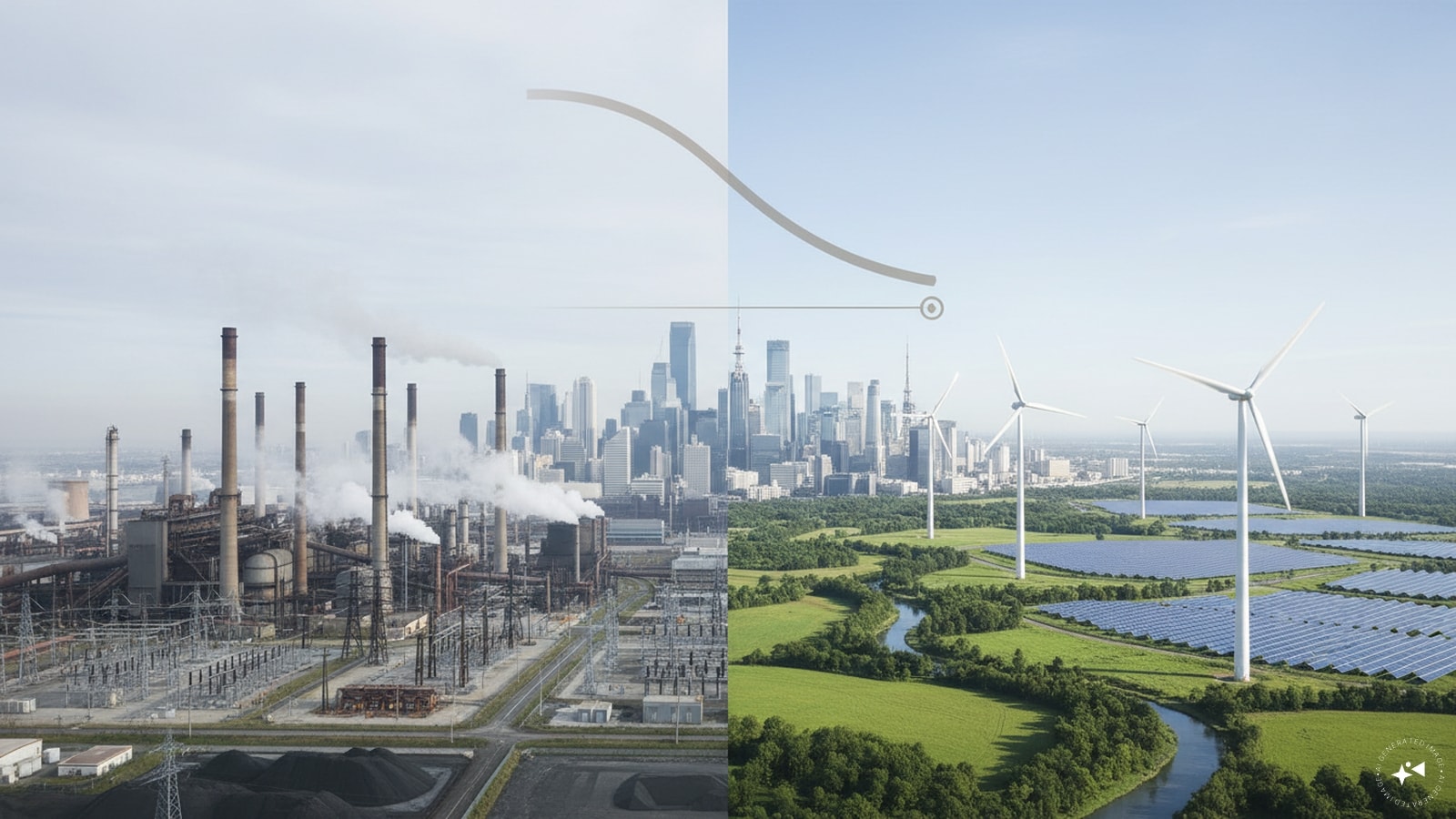
If you thought global climate promises were finally steering the ship away from disaster, a stark reality check just arrived. Current national climate pledges will cut global greenhouse gas emissions by a meager 6% below 2019 levels by 2035. That is not just a minor miss. That is a catastrophic failure of ambition when scientists say emissions need to plunge by roughly 60% over a similar timeline to stabilize global temperatures safely.
The latest data from the United Nations Framework Convention on Climate Change, detailed in their 2026 Nationally Determined Contributions Synthesis Report, lays bare how far off track governments really are. Even if countries pull off the impossible and fully implement every single conditional target on the books, emissions will still only drop by 9% by 2035.
Let's look at what this means for the planet, why governments keep falling short, and what real action actually demands right now.
The Gap Between Paper Promises and Physics
Governments love setting targets for 2050. It sounds responsible, looks great on political brochures, and kicks the hard political decisions down the road for future administrations to handle. The UN assessment—which analyzed 127 new national climate plans representing 154 parties to the Paris Agreement—reveals that while long-term net-zero goals between 2040 and 2070 are multiplying, short-term implementation is profoundly weak.
When you stack these current national pledges alongside those long-term decarbonization targets, analysts estimate the world is still hurtling toward a global warming trajectory of 1.7 to 2.3 degrees Celsius by the end of the century.
Physics doesn't negotiate with political convenience. Every fraction of a degree past the 1.5-degree threshold locks in more extreme weather, melting ice sheets, and economic disruption. Yet, national capitals are submitting targets that shave off a single-digit percentage of emissions over the next decade.
Why Are National Pledges So Weak?
You might wonder how world leaders can look at recurring climate disasters and still sign off on a 6% reduction target. The friction points are painfully predictable.
First, energy security anxieties still trump climate ambition in executive boardrooms and parliamentary halls. Whenever fossil fuel markets tighten or geopolitical tensions spike, nations instinctively scramble for domestic coal, oil, and gas to keep the lights on and voters placated.
Second, the financial mechanisms to support developing nations remain underfunded and overly bureaucratic. Emerging economies argue—fairly—that they cannot aggressively ditch affordable fossil fuels without massive, upfront international financing for clean grids. Wealthy nations have consistently underdelivered on those financial promises, leaving a stalemate where everyone waits for someone else to make the first expensive move.
Third, domestic lobbying by legacy energy industries continues to dilute policy teeth. Even when climate laws pass, watering-down amendments often sneak in behind closed doors, creating loopholes that render emissions caps toothless.
What Real Action Looks Like
If a 6% cut by 2035 is essentially business as usual disguised as diplomacy, what needs to change?
Honestly, governments need to stop treating NDCs as aspirational wish lists and start treating them as binding operational blueprints. According to independent climate analytics, meaningful alignment with safe temperature limits requires aggressive, near-term restructuring across three major fronts:
- Tripling renewable power generation capacity globally while systematically retiring coal-fired plants at a much faster pace.
- Slashing methane leaks from oil and gas operations immediately, which provides an instant brake on near-term warming.
- Enforcing strict accountability metrics so that national targets carry real legal and economic penalties for non-compliance.
Waiting for voluntary compliance isn't working. If you care about where this trajectory leads, pay less attention to glossy 2050 net-zero headlines and watch what countries commit to doing between now and 2035. That is where the battle for a stable climate is actually being lost.