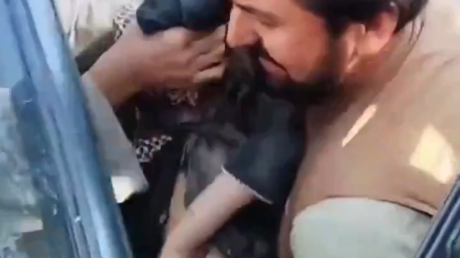
When the military issues another forced evacuation order for Gaza City, most people grab whatever they can carry and run. But what happens when your job is to stay behind, pick up a camera, and show the world what is happening while your own children are crying in the dust next to you?
That is the raw, agonizing reality at the center of modern journalism in Gaza. Reporting from an active war zone is brutal enough when you have a press card, a hotel room, and an exit ticket. It becomes an entirely different nightmare when you are the story, the victim, and the reporter all at once. Local journalists aren't just covering a crisis from a safe distance. They are living under the same bombardment, standing in the same endless bread lines, and watching their neighborhoods turn into grey rubble.
The Impossible Choice Between Family and the Story
Every single day requires an impossible calculus. Do you pack up your remaining pots and pans to find a safer patch of tent city for your aging parents, or do you keep your battery charged to upload footage of a strike three blocks away before the cellular network drops out entirely?
For independent documentarians and local correspondents, the line between professional duty and personal survival completely evaporates. When fuel is practically nonexistent and internet access depends on sporadic satellite signals or dangerous dashes to high rooftops, filing a report is an endurance test. You aren't just fighting deadlines. You are fighting hunger, exhaustion, and the suffocating weight of cumulative trauma.
Major international news bureaus rely heavily on these local reporters. Yet, the global audience rarely sees the quiet moments behind the broadcast. They don't see the reporter editing video clips on a cracked smartphone screen inside a crowded school shelter, or the constant dread of wondering if the next incoming missile is heading for the tent where their spouse and kids are sleeping.
Why Witnessing the Cost Changes Everything
There's a massive difference between reading wire service updates and watching raw, unfiltered footage captured by someone whose hands are visibly shaking. When a journalist films their own forced displacement from Gaza City, the standard detachment of traditional reporting disappears.
This style of frontline documentation breaks through the numbness that often sets in after years of conflict headlines. It forces viewers to confront the human scale of mass displacement. Numbers on a casualty chart or arrows on a tactical map hide the reality of a mother carrying a toddler down a debris-choked street with no destination in mind.
The Heavy Toll on the Truth
Keeping the cameras rolling comes with an unbearable price tag. Scores of media workers have been killed, injured, or left completely destitute. Equipment gets pulverized in targeted strikes or crushed beneath collapsed buildings. Power outages mean charging a camera battery requires bribing someone with a working solar panel or a noisy generator.
Despite the blockade, the constant surveillance, and the active threats, local reporters keep filming. They know that if they stop documenting, the narrative gets erased. Their footage remains one of the primary historical records of a devastating humanitarian catastrophe, captured from the inside out.
When you watch these dispatches, remember that the person behind the lens isn't just an observer doing a job. They are fighting to make sure their reality isn't swept under the rug while the rest of the world looks away.
Support independent local media outlets directly, share verified frontline documentation across your networks, and refuse to let the human stories behind the headlines fade into background noise.